Pond Sediment Control & Dredging in Illinois
Across Illinois, pond and lake owners face a common challenge: sediment buildup. From residential ponds and HOA communities to golf courses and commercial properties, sediment accumulation can reduce water depth, impact water quality, and contribute to excessive algae and aquatic weed growth.
Illinois experiences seasonal rainfall, agricultural runoff, shoreline erosion, and changing temperatures that influence sediment accumulation. Over time, organic debris, soil particles, and excess nutrients settle at the bottom of lakes and ponds, creating conditions that can negatively affect aquatic ecosystems.
Understanding how sediment develops and implementing effective management strategies are essential for maintaining healthy, functional waterbodies throughout Illinois.
What Causes Pond Sediment in Illinois?
Sediment naturally accumulates in lakes and ponds, but environmental conditions and surrounding land use can accelerate the process. Common causes include:
- Stormwater runoff and erosion: Heavy rainfall and spring storms carry soil, debris, and other materials into waterbodies.
- Nutrient loading: Fertilizers, agricultural runoff, and surrounding landscaping introduce nutrients that encourage algae and aquatic plant growth.
- Decaying vegetation and algae: Seasonal plant growth and decomposition contribute organic matter to the pond bottom.
- Unprotected shorelines: Eroding banks allow soil to enter the water, gradually increasing sediment accumulation.
- Fallen leaves and organic debris: Autumn leaf accumulation and decomposing vegetation contribute to organic muck.
Over time, these materials settle along the bottom, reducing water depth and potentially creating favorable conditions for excessive aquatic vegetation and algae growth.
Why Sediment Is a Concern for Illinois Lakes and Ponds
Illinois ponds experience seasonal environmental changes that influence sediment accumulation and overall water quality.
Several factors contribute to sediment-related challenges:
- Spring rainfall: Heavy precipitation increases runoff and transports sediment into lakes and ponds.
- Summer temperatures: Warmer water supports increased biological activity and aquatic plant growth.
- Fall vegetation: Falling leaves and dying aquatic plants add organic material to the pond bottom.
- Winter conditions: Ice cover and reduced water circulation can influence oxygen availability and organic matter decomposition.
Without proactive management, sediment can gradually reduce water depth, limit recreational opportunities, affect aquatic habitats, and increase long-term maintenance needs.
Proven Sediment Reduction Strategies
Preventing sediment from entering a pond is one of the most effective ways to reduce long-term maintenance needs and potentially delay costly dredging projects.
Shoreline Aquatics recommends a proactive, science-driven approach to lake and pond management throughout Illinois.
1. Watershed & Runoff Control
Managing runoff from surrounding properties helps reduce the amount of sediment and nutrients entering a waterbody.
Vegetative buffer zones, erosion control measures, and properly designed stormwater management systems can help capture sediment before it reaches the pond.
These strategies are especially important for Illinois properties surrounded by agricultural land, residential developments, and commercial landscapes.
2. Pond Aeration Systems
A professionally designed pond aeration system improves water circulation and increases dissolved oxygen levels throughout the water column.
Adequate oxygen supports beneficial microbial activity, which can help break down accumulated organic matter under suitable conditions. Aeration also supports fish health and overall aquatic ecosystem balance.
Although aeration does not remove mineral sediment or replace mechanical dredging, it can be an important component of a comprehensive pond management plan.
3. Beneficial Bacteria for Ponds
Beneficial bacteria treatments may help accelerate the decomposition of certain organic materials that accumulate along the bottom of lakes and ponds.
When used under appropriate environmental conditions, these treatments can support natural biological processes and help manage organic muck.
However, bacterial treatments do not remove sand, silt, or other inorganic sediment. Their effectiveness depends on water temperature, oxygen availability, and the composition of accumulated material.
4. Routine Debris Removal
Removing fallen leaves, excessive aquatic vegetation, and other organic debris helps limit the amount of material settling along the pond bottom.
Routine maintenance is particularly beneficial during the fall when Illinois ponds experience increased leaf accumulation and seasonal vegetation dieback.
5. Shoreline Stabilization
Unstable shorelines are a significant source of sediment in many Illinois ponds.
Installing riprap, establishing native vegetation, and implementing shoreline restoration solutions can help minimize erosion and protect the surrounding landscape.
Maintaining stable shorelines also supports long-term water quality and reduces future sediment management needs.
When Is Pond Dredging Necessary?
Even with proactive maintenance, sediment can accumulate to the point where physical removal becomes necessary.
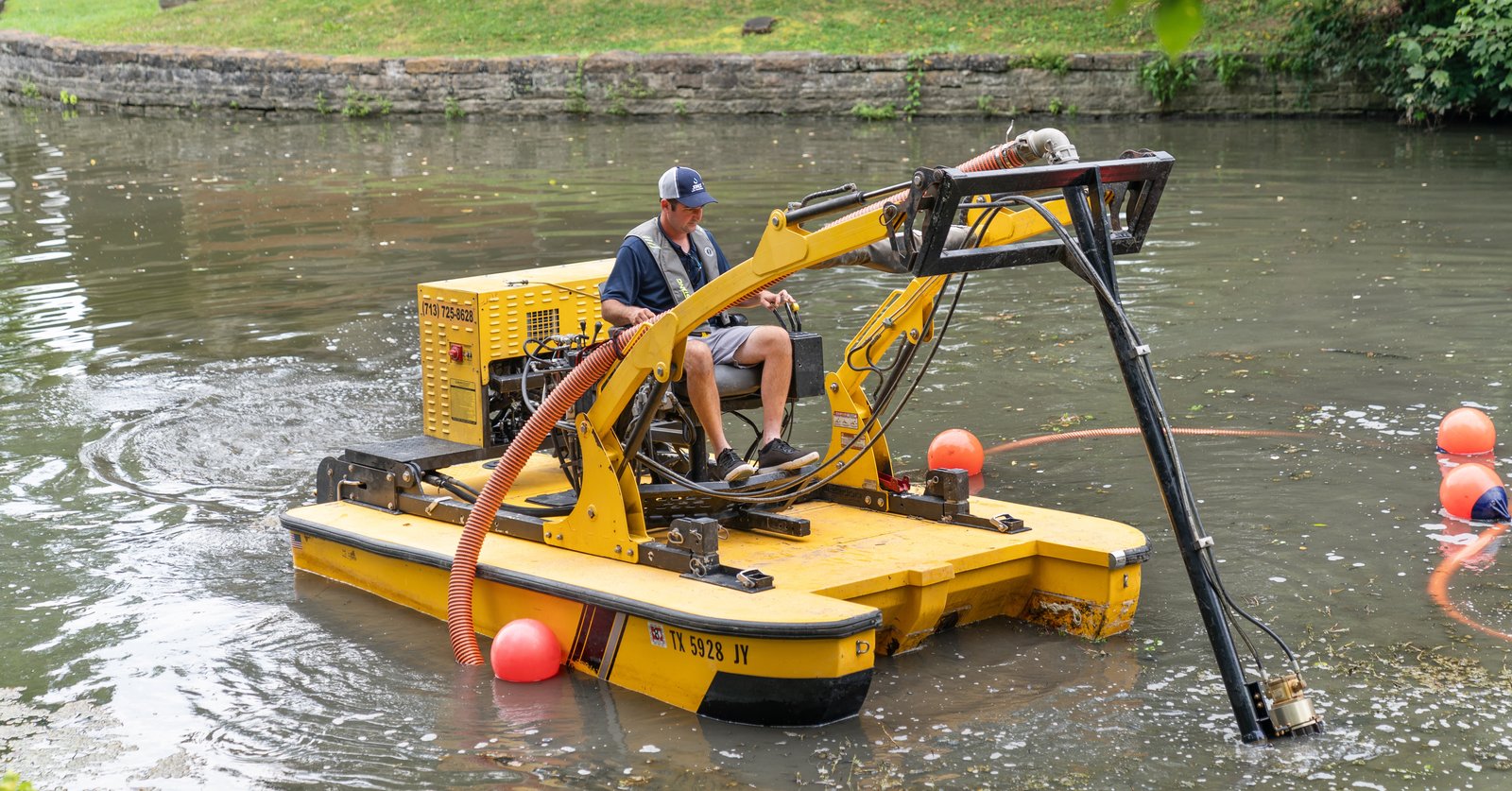
Dredging restores water depth by removing accumulated sediment and debris from the bottom of a lake or pond.
Signs that your Illinois pond may benefit from dredging include:
- Noticeably shallow water or reduced pond capacity
- Increased aquatic weed growth in previously deeper areas
- Excessive sediment accumulation near inlets or shorelines
- Reduced fish habitat and recreational access
- Poor water circulation caused by sediment-filled areas
- Significant buildup of organic muck
While algae blooms and excessive vegetation can indicate underlying water quality concerns, they do not always mean dredging is necessary. A professional assessment can help determine the source of the problem and identify appropriate solutions.
Spot Dredging vs. Full Pond Dredging
Not every lake or pond requires a complete dredging project. The appropriate approach depends on sediment distribution, water depth, accessibility, and overall management goals.
Spot Dredging
Spot dredging focuses on specific areas where sediment accumulation is most significant, such as:
- Stormwater inlets
- Shallow coves
- Drainage outlets
- Shoreline access areas
- Localized sediment deposits
This targeted approach may provide a cost-effective solution when sediment buildup is limited to certain portions of a waterbody.
Full Pond Dredging
Full pond dredging involves removing sediment across a larger portion of the waterbody to restore depth and improve functionality.
This approach may be necessary when widespread sediment accumulation affects water capacity, aquatic habitat, or recreational use.
A professional sediment assessment can help determine which dredging method is appropriate for your Illinois property.
Cost of Pond Dredging in Illinois
Pond dredging costs vary depending on the size of the project, site conditions, and sediment removal requirements.
Factors influencing overall project costs include:
- Sediment volume: The amount of material that needs to be removed.
- Site accessibility: Equipment access and surrounding property conditions.
- Sediment composition: The type and characteristics of accumulated material.
- Disposal requirements: Transportation, dewatering, and approved disposal methods.
- Permitting regulations: Applicable local, state, and federal requirements.
- Dredging method: The equipment and techniques required to complete the project.
Planning ahead allows property owners to evaluate sediment conditions and budget for future maintenance before significant depth loss occurs.
Long-Term Pond Management for Illinois Properties
Maintaining a healthy lake or pond requires more than addressing sediment after it becomes a problem.
A comprehensive management plan combines preventive maintenance with long-term strategies to protect water quality and aquatic ecosystems.
Key components include:
- Sediment prevention: Reducing runoff, erosion, and nutrient inputs.
- Aeration and biological management: Supporting oxygen levels and natural decomposition processes.
- Aquatic vegetation management: Controlling excessive plant growth and organic debris.
- Routine monitoring: Evaluating water quality, sediment accumulation, and seasonal conditions.
- Long-term dredging planning: Identifying when sediment removal may be necessary to restore water depth.
At Shoreline Aquatics, we understand the unique challenges Illinois lake and pond owners face throughout the changing seasons. Our science-driven approach to lake and pond management focuses on maintaining healthy aquatic ecosystems, addressing sediment-related concerns, and developing long-term solutions for waterbody maintenance.
Protect Your Illinois Lake or Pond with Shoreline Aquatics
Sediment buildup is a natural part of lake and pond aging, but proactive management can help reduce its impact.
Whether your pond is experiencing shallow water, excessive vegetation, shoreline erosion, or declining water quality, identifying the underlying cause is the first step toward developing an effective management strategy.
About Shoreline Aquatics — A Jones Lake Management Partner
Shoreline Aquatics provides professional lake, pond, and stormwater management solutions throughout East Central Missouri and South Central Illinois designed to improve water quality, restore ecological balance, and enhance the beauty and functionality of aquatic environments. As a proud Jones Lake Management partner, we combine local knowledge with the resources, science, and proven strategies of one of the nation’s leading lake and pond management organizations. www.shoreline-aquatics-llc.com